

Information on bird mites in the home & practical strategies
___
A home which is invaded by bird mites can quickly become an infestation that is very hard to get under control. Because parasitic bird mites can multiply quickly and they are able to hide easily because of their very small size; and it makes it difficult to eradicate them completely. Bird mite dermatitis is very common with a home infestation and it can also rob the person of sleep at night; and what might have seemed like an ‘easy thing to resolve‘ has now become a ‘life altering’ experience.
Bird Mite Symptoms:
- Multiple pinprick sharp and painful bites anywhere on the body, which can produce lesions on the skin (papules)
- Crawling and swarming sensation on the skin, especially at night when they are more active; and they will often invade the nose and mouth
- Patchy dermatitis consisting of dry, itchy and reddened areas that heal slowly More…
- Arthralgia – joint aches and pain due to the inflammatory response of the body from the constant bird mite bites
- A ‘fractured’ sleep pattern at night; which can lead to other health-related issues over time
- For some, bird mites can be a vector for other pathogens; such as the spirochete that causes Lyme disease
“This is terrible… I am not sleeping much as they are more active at night and they swarm on my face and get in my mouth and nose, and even in my eyes.”
Gamasoidosis – The condition of being personally afflicted by parasitic bird mites; with symptoms such as painful bites, red and itchy dermatitis and skin lesions (papules). Human ‘parasitosis‘ from bird mites is not well understood by many in the medical community…even though it has been documented in medical journals since the 1920’s. And Dermatologists may fail to recognize the signs of bird mite dermatitis or misdiagnose it as scabies; and unfortunately that treatment regimen does not help with bird mite dermatitis.
Excerpts: (“Cases of gamasoidosis have been reported since the 17th century, and documented in the leading medical literature since at least the 1920s…Increasing reports of bird-mite attacks on humans and mammalian companion animals suggest that avian mite ectoparasitosis / dermatitis (gamasoidosis) may be of increasing medical and veterinary concern.” ) **
** George, D.R., Finn, R.D., Graham, K.M. et al. Should the poultry red mite Dermanyssus gallinae be of wider concern for veterinary and medical science?. Parasites Vectors 8, 178 (2015).
___
“Have learned the hard way that doctors have no answer to this dilemma, except to give something for the inflammation and dermatitis. And entomologist can ID the mite, but can’t really help with a home infestation…and most PCOs are clueless on treating the home effectively for bird mites.”
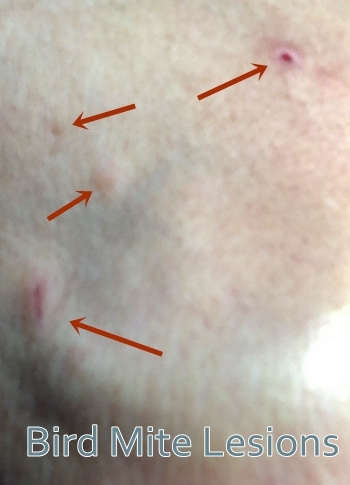
Bird mite lesions on the elbow and forearm. These can be painful and itchy and can often take weeks to heal properly. (Image submitted by one of our readers; a mother who along with her young son have been dealing with a bird mite infestation in the home for a couple of years now.)
___
Bird Mite D. Gallinae
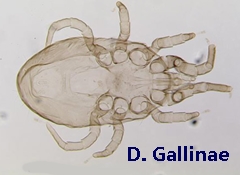
For many, the bird mite most troublesome is Dermanyssus Gallinae (D. Gallinae). It is whitish and nearly opaque, very small and not easily seen without magnification. The adult mite will often become larger and reddish after a blood meal. It has become problematic for many regions of the northern hemisphere; and has been implicated in the rapid spread of Avian influenza (bird flu), that has devastated the egg laying industry.
Dermanyssosis – The medical term which describes an affliction from the bird mite D. Gallinae; with not only the external symptoms of Gamasoidosis mentioned previously, but it can also include internal symptoms; as this mite will often invade the mouth, nostrils, ears, and even the eyes. It is small enough that some have reported that this mite will burrow into the top layer of their skin and become very difficult to remove. Although parasitic mites are considered ‘ectoparasites‘, an MSU research study documented that they can also be ‘endoparasites‘ for part of their life cycle; sometimes invading nasal passages, the bronchi and lungs of the host mammal.
It is a bit of a misnomer to call the parasitic mite D. Gallinae a ‘bird mite’. Although it was first identified on birds and later on chickens (aka ‘Poultry Red Mite’); it is now documented as infesting many other mammals from rodents to humans. Although the mite D. Gallinae is considered a ‘host specific’ parasite; when the original host is no longer available, they have the ability to adapt and switch host in order to survive. And that is when they can become a problem for people.
Parasitic Bird Mite Characteristics
- Chemoreceptors – allows them to detect CO2 from the host mammal, and to communicate with each other for swarming onto the host. And also to sense the pheromones used for mating and reproducing afterwards. (That is why a strong scent in the room can often help to make it more difficult for swarming and biting.)
- Thermoreceptors – allows them to sense heat and moisture from the host mammal, and even to detect light; as they prefer to hide during the day in darkened areas.
- Mechanoreceptors – allows them to sense movement from the host mammal. When the host is active then they are much less active; conversely, when the host is at rest then they become more active.
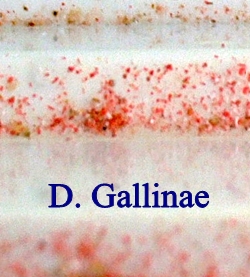
Hundreds of blood engorged bird mites on the bottom of a bird cage, due to a home infestation.
Research has documented: “D. Gallinae can revert to an earlier ‘morphological state’ in order to not be rejected by the host’s immune system”… because of their genetic plasticity. And over time this mite can become smaller but more insidious to the person who is being afflicted and can even survive on lymph fluid and will no longer appear dark red. It is documented as surviving 9 months without a host under certain circumstances. And it has shown the ability to quickly adapt to most any environment. Consequently, many have stated that they have dealt with this mite for years without finding relief; spending a lot of time and money having the home fumigated and treated with various chemicals, having to get rid of most everything they own and sometimes even moving!
___
>> The other less frequently encountered bird or rodent mites that can also produce dermatitis and other problems in the human environment are O. Bacoti, O. Bursa and O. Sylviarum (NFM). They typically are slightly larger and darker than D. Gallinae, and can sometimes be visibly seen as “walking black pepper” on light colored surfaces. They also do not live as long without a host and are not always as difficult to eradicate in the environment as D. Gallinae. The NFM also prefers to spend most of its life cycle on the host and is less prone to hiding in the environment; but these mites can all be difficult to fully eradicate…especially if there is a bird or rodent nest that continues to produce a mite population. <<
Miticide – A product that is effective in eradicating bird mites. Some literature refers to this as an ‘acaricide‘. It can be a natural product such as sulfur, a man made chemical such as Esfenvalerate, or a plant extract such as Neem oil. Some products are fast acting, such as 91% alcohol, others work more slowly but can be just as effective, such as Elector PSP. Some miticides will have a ‘residual’ effect that will kill mites over time, such as Onslaught.
FYI: Mites are an ‘arachnid’ not an ‘insect’, so some of the products labeled as ‘insecticides’ will not be effective for bird mites. And sometimes a product will work for a short while and then become less effective over time.
PCO (Pest Control Operator, i.e. exterminator) – Someone who is trained and experienced in dealing with various pests in the home or business, and able to use the appropriate chemicals and treatment applications for the situation. Unfortunately, bird mites are not something that many PCOs have much experience or success with. By the time most occupants seek help, the situation has gotten to the point that the mites are infesting furniture, bedding, and many other places that cannot adequately be treated by a PCO.
“What a nightmare! These mites are easy enough to kill but so far impossible to complete eradicate and they keep multiplying quicker than I can kill them. It has been three years now!”
A Bird Mite Affliction
- When a person first encounters bird mites in the home it will seem like this is mainly a ‘skin parasite issue‘; because of the constant biting, itchy dermatitis, the skin lesions, etc.
- Unfortunately, the person quickly realizes that it has become a significant ‘environmental issue‘ as they infest other places that the person will be for any length of time: such as the workplace, the automobile, other people’s homes, etc.
- And sadly for many with a long standing mite infestation, the worst aspect will become the ‘mental anguish’ that occurs; such as the weariness and stress from a lack of quality sleep most nights, the frustration and discouragement from not ‘winning the battle’, the financial strain from purchasing various products or having the home professionally treated, the remorse of having to discard personal items and furnishings, and also the anxiety and wariness of being around others; especially visitors that come into a home infested with mites…from not wanting this to become their problem also.
“I cannot seem to defeat these little buggers. I do not see them but can feel them bite me sharply, especially around my feet, because they are in the carpet.”
Debunking A Bird Mite “Myth”
For those who are dealing with bird mites, if you should mention this to someone who is unaware of this; the natural inclination would be to do a search, such as “bird mites biting people”. And they would then see this as the top search result:
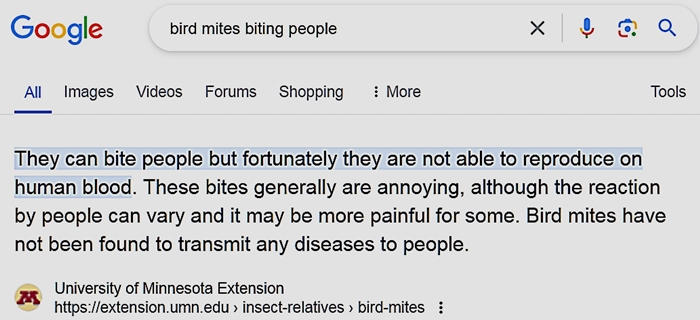
And they even highlighted ‘bird mites cannot reproduce on human blood’; which we know is incorrect and is documented as such in numerous medical research journals, as well as the anecdotal evidence from those who have been afflicted for many years; long after the original source of infestation was identified and removed. And D. Gallinae is a known vector of various pathogens to humans, despite the search result which states otherwise; but unfortunately, the top search results are all from entomology websites.
Some may be unaware that Entomologists DO NOT study humans, and they are not really familiar with the medical diagnosis of ‘parasitosis’, ‘dermanyssosis’, or ‘gamasoidosis’; and unfortunately, most of the generic search results do not reflect the human equation.
It is only when people search using the specific medical terms mentioned here will they see more accurate information regarding this baffling human affliction that many have had to deal with; for which there seem to be no simple answers to.
(Some of these medical journal articles are listed on our ‘Resources‘ web page.)
“If the chemo and radiation I had to go through never killed them, I can’t think of anything else that will short of death.”
___
There Is Not ONE Thing That Works!
The fact is it usually takes MANY things to get bird mites under control in the home; for those dealing with a home that is heavily infested. Here are some of the strategies that can be used to get bird mites out of the home; especially if it has gone on for a long period of time.
PROTOCOL:
- Vacuuming EVERYWHERE…Including carpets, hardwood floors, along baseboards, in closets, door and window trims, the walls, and even ceilings. Depending on the level of infestation it may need to be done daily Vacuuming Strategy
- Bathing or showering daily with an epsom salt scrub or some other solution that will get the mites off the skin
- Treating the skin with products that will reduce the painful, itchy dermatitis and skin lesions
- Frequent laundering of infested items – and storing cleaned items in storage bags or air tight bins Laundry Tips
- Spraying items such as furniture, mattress covers, etc. with an effective miticidal product
- Using zippered waterproof protectors for the mattress, box spring and pillows Bedroom Strategies
- Sealing infested items; such as clothing, bed sheets, towels, etc. in air tight plastic trash bags with Para mothballs until they can be washed
- Storing photos, books and other keepsakes in airtight storage bins (IP67) and adding Para mothballs to kill them (place mothballs in socks to prevent direct contact with fragile items that could be damaged)
- Wet mopping the floors, walls, and even some ceilings with a Velcro micro fiber wet mop and an effective miticide
- Tank spraying an effective miticide along baseboards, door and window trims, in closets and cabinets and other hiding places in the home Tank Sprayer
- ULV fogging of walls and ceilings ULV Fogger
- Consider purchasing solid surface furniture, such as leather, vinyl, wood, etc.; and avoid fabric furniture
- Consider removing carpeting and replacing with hard flooring in a home that has been heavily infested for a long period
“My skin is dry and itchy where the mites have bitten me repeatedly, especially my scalp. Nothing seems to help very much, I can only get temporary relief from the itching using vinegar on my scalp when showering.”
…
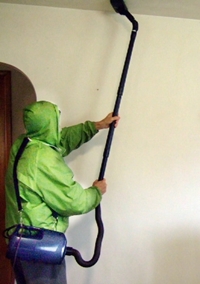
TIP: A lightweight vacuum with a shoulder strap and long extensions can be useful for getting bird mites that are on the ceilings, walls and hard flooring. The crevice tool can be useful for the corners of closets, cabinets, along baseboards, door and window trims, etc. (Duct tape the vacuum opening when done). Riccar and Oreck both make similar sized portable vacuums.
“This has been tough to deal with. I think I would rather have both scabies and bed bugs at the same time than to deal with a house full of bird mites. The loss of sleep is tough. And I worry about having anyone coming over to visit.”
Micronized Sulfur for Bird Mites
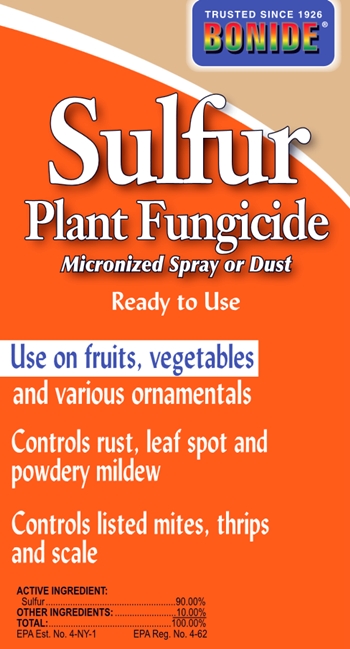
Sulfur has long been used as an insecticide and miticide to control mites, fleas, ticks, etc.; and it has also been used in products to promote healing of some skin disorders. Bonide’s micronized sulfur has a very small particle size, at about 4-5 micron, according to the company. A wetting agent has been added to this product so it can be properly assimilated into liquids. Bonide sulfur is sold at some hardware and farm supply stores in both a one pound and four pound size.
Caution: Because of the very small particle size, the company recommends a breathing mask and goggles when handling the powder. It is flammable in the powder form. And some may find it irritating to the skin. It can also stain clothes and bed linens.
For those dealing with bird mites in the home, micronized sulfur can have both ‘personal’ and ‘environmental’ benefits:
- It can be used to make a sulfur skin cream for bird mite dermatitis. It can be beneficial for healing skin lesions, as well as for repelling bird mites on the skin More…
- It can be added to the ‘mite carpet dusting powder’ for not only carpeting but also fabric furniture, etc. More…
- It can be added to body wash when showering for scrubbing away the mites that are on the skin
- A small amount can be mixed into regular skin lotion to promote healing of bird mite dermatitis
- A spray solution with a miticidal product, such as pine oil mixed with sulfur, can be applied to various surfaces in and around the home. (You will need to use a heavy duty spray bottle. And shake the bottle vigorously before each use, as it tends to settle quickly.) This solution can also be put in a tank sprayer for getting along baseboards and into hidden areas of the home
…
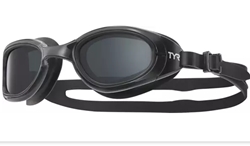
TIP: Snug fitting swim goggles can be worn at night to keep bird mites out of the eyes while sleeping.
“Had to start wearing swim googles at night, as the mites have gotten really bad lately around my face and in my eyes.”
TIP: Benadryl, an anti-histamine can be an option for some; taken at bedtime when sleep seems illusive from the bird mites. It can lessen the effects of the bites and is a mild sedative.
…
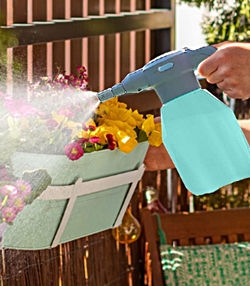
TIP: A battery powered ‘plant mister’ can be beneficial for applying a variety of products. It can cover a wide area with much less effort that using a spray bottle and will provide a more evenly applied miticidal product; as when spraying mattress covers, curtains, furniture, etc. Can be used with most any water based product, such as Pine oil, MG, LATA, HOCL, etc. Unclear if 91% alcohol should be used with this; as it might damage the internal spray components.
Hospital Precautions
For anyone dealing with bird mite parasitosis, if an overnight hospital stay is required, then letting the staff know about your status can help both them and yourself in this dilemma. It helps to educate and protect them as they take the necessary precautions; and the increased vigilance can also mean less discomfort for the person while in the hospital.
If the staff is unaware of bird mite gamasoidosis, either PCR or IgE tests can be performed to confirm human parasitosis. The staff can refer to this and other websites, as there are plenty of medical research articles describing this affliction and how to test for it. They can then take the same precautions as they would if the person had an active case of scabies. This can include:
- Patient will be assigned a private room
- A ‘negative pressure’ room is preferred, if available
- Staff will wear disposable gowns and footwear protectors when in the room
- Staff will also use ‘contact precautions’ when personally assisting the person; such as wearing mask and gloves
- Staff will change the bed linen daily, and place soiled linen in sealed bags until it is washed
- Staff should consider wet mopping the floor daily and spraying the bed frame, both sides of the mattress, and also other items like an IV pole, etc., with a germicidal disinfectant spray. Although this may not always be possible if the person cannot vacate the room for a short period of time
- Patient will have germicidal wipes and hand sanitizer gel at their disposal, to use PRN
- Patient will shower or sponge bathe daily, if able. And all towels will be put in sealed bags until laundered
After the person is discharged, the hospital can then make a more thorough cleaning of the room to ensure that others do not become the unwitting host of bird mites.
**Information provided by Timothy M., an Occupational Therapist experienced working with high-risk hospitalized patents.
___
Please DO NOT give away any mite infested items to others, these should be disposed of in sealed bags in the trash.
___
>> Disclaimer: The reader assumes all responsibility for using any chemical or product in accordance with the manufacturer’s instructions.<<
___
This website is not monetized and there is no endorsement revenue. The products mentioned and the links provided are solely for the reader’s benefit.